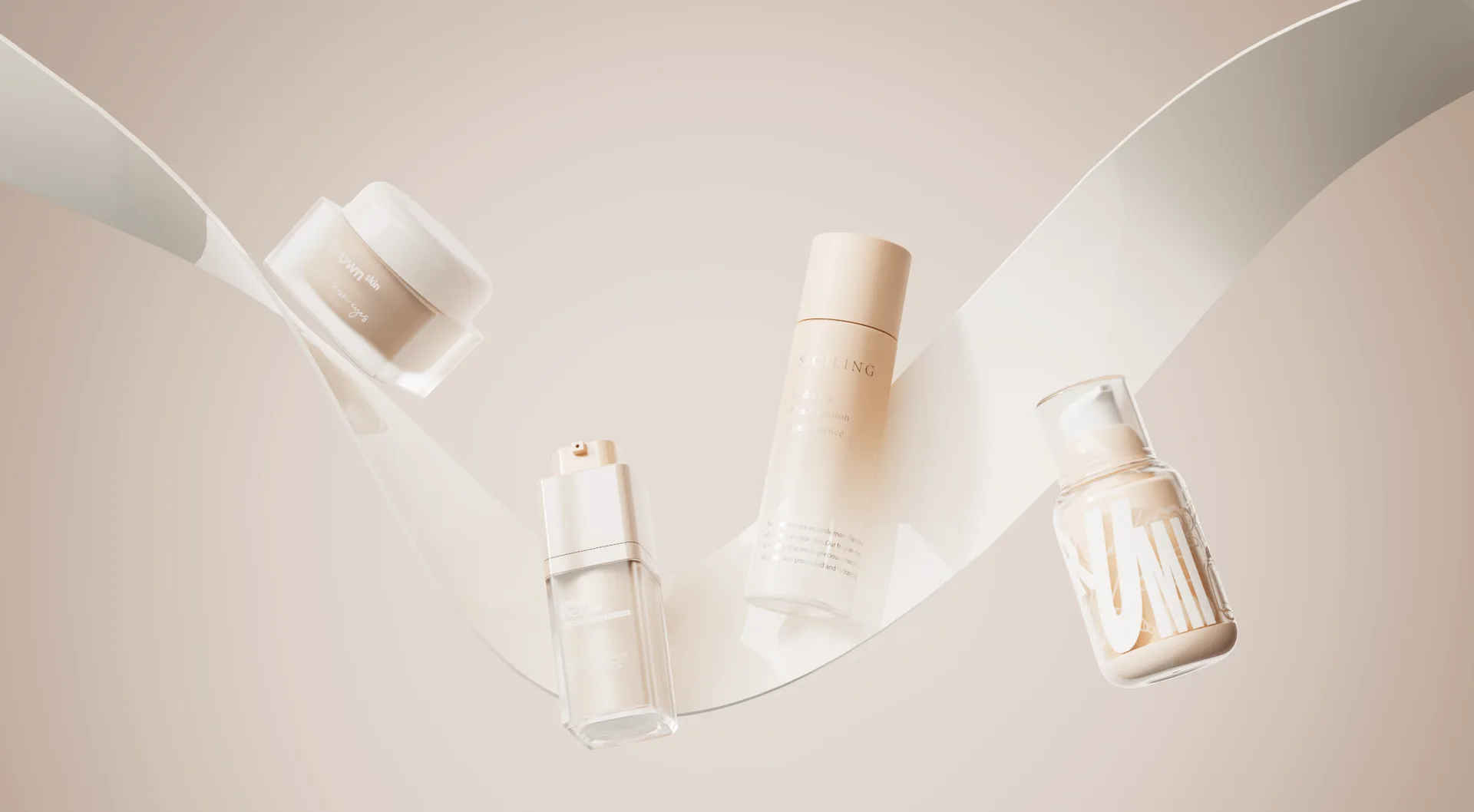
Evaluating polypropylene vs petg (alongside standard PET) is one of the most critical material selection decisions in cosmetic packaging engineering. When a packaging engineer asks a beauty brand which material they want, the honest answer is rarely a single resin code — it is a matrix of functional requirements: Crystal clarity or opaque matte? Does the bulk formula contain active lipids, alcohols, or aggressive essential oils? What are the hot-fill and storage temperature ranges? Will the surface undergo vacuum metallization, silk screening, or soft-touch coating?
PP (Polypropylene), PET (Polyethylene Terephthalate), and PETG (Glycol-Modified PET) represent the three workhorse thermoplastics in modern beauty manufacturing. However, they are mechanically and chemically distinct — swapping one for another without empirical testing invites seal failure or formula destabilization.
The Core Trade-Off: Choose PP for closures, dynamic pump pistons, and solvent/lipid-rich formulas. Choose PET for crystal-clear cosmetic bottles requiring strict oxygen barrier protection and closed-loop recyclability. Choose PETG for heavy-wall luxury cosmetic jars requiring glass-like aesthetics with high drop impact toughness.
1. The Three Resins in Summary
Understanding the core molecular differences in polypropylene vs petg determines how each resin performs across functional cosmetic component groups:
- PP (Polypropylene): A semi-crystalline polyolefin known for exceptional fatigue endurance, high chemical inertness, and lightweight density (~0.90 g/cm³). It is the premier choice for threaded closures, fine-mist collars, and airless sliding pistons. While natural homopolymer PP exhibits a translucent milky haze, clarified copolymer PP grades can achieve high optical transparency.
- PET (Polyethylene Terephthalate): A semi-crystalline polyester renowned for sparkling, glass-like clarity and rigid mechanical integrity. PET forms an outstanding barrier against oxygen (O₂) and carbon dioxide (CO₂) permeation, making it indispensable for active formulas susceptible to oxidative degradation. It represents the most mature mechanical recycling stream worldwide (RIC #1).
- PETG (Glycol-Modified PET): An amorphous copolymer created by introducing cyclohexanedimethanol (CHDM) into the polyester backbone. This glycol modification prevents crystallization, providing high optical transparency, low haze, and superior impact resistance. PETG processes at lower melt temperatures without crystallization hazing, making it ideal for deep-draw, heavy-wall container molding.
2. Polypropylene vs PETG: Technical Trade-Offs & Decision Matrix
When evaluating polypropylene vs petg alongside oriented PET, packaging engineers must balance optical clarity, solvent resistance, gas transmission rates (OTR/WVTR), tooling shrinkage, and decorating compatibility. The matrix below benchmarks primary performance parameters across standard cosmetic packaging formats:
| Engineering Metric | Polypropylene (PP) | PET | PETG |
|---|---|---|---|
| Optical Clarity & Haze | Translucent to Milky (Haze >25%; Clarified <8%) | High / Glass-like (Haze <3%) | Superior / Glass-like (Haze <2%) |
| Chemical & Oil Resistance | Outstanding (Resists alcohols, esters, ketones, lipids) | Moderate to High (Sensitive to strong alkalis/solvents) | Moderate (Prone to stress cracking with essential oils) |
| Oxygen Barrier (OTR) | Poor to Moderate (~1500 cc/m²·day) | Excellent (~50 cc/m²·day) | Moderate (~350 cc/m²·day) |
| Impact Toughness | High (Ductile yield; will not shatter) | Moderate (Orientation improves drop strength) | Exceptional (High shatter resistance in thick walls) |
| Typical Component Fit | Pumps, actuators, closures, Mono-PP bottles | ISBM clear bottles, high-barrier serums, toners | Heavy-wall jars, compacts, luxury thick-base bottles |
Material Qualification Program
Evaluating Polymer Fit for Your Skincare Formula?
Eliminate stress cracking, solvent swelling, and optical haze risks before cutting production steel. Request our engineering material swatches across PP, PET, and PETG resins with bulk compatibility testing protocols.
When Each Resin Wins in Production
In high-performance cosmetic design, selecting polypropylene vs petg comes down to component role and chemical exposure:
- Closures & Pump Engines: PP wins unequivocally due to its low friction coefficient, flexural hinge memory, and universal resistance to fatty acids and cosmetic emollients.
- Active Oxidation-Sensitive Serums: PET wins where oxygen transmission must be minimized to preserve active retinoids and Vitamin C derivatives without requiring multi-layer co-extrusion.
- Luxury Heavy-Wall Cream Jars: PETG wins when brands seek the in-hand heft and glass-like refractive index of acrylic (PMMA) but demand superior drop shock resistance and faster injection cycles without internal sink voids. Explore our luxury cosmetic jars collection.
3. Circularity & Recycling Stream Realities
In the polypropylene vs petg sustainability evaluation, circularity claims must reflect real-world municipal infrastructure validated under RecyClass Design for Recycling Guidelines:
- PET (RIC #1): Represents the single most mature curbside collection and mechanical recycling stream in Europe and North America. Bottle-grade rPET is widely available with verified food-grade origin.
- PP (RIC #5): Rapidly scaling across Europe with dedicated polyolefin recycling infrastructure. Mono-material PP containers achieve Class A/B Design-for-Recycling (DfR) ratings under RecyClass guidelines.
- The PETG Recycling Hazard: Although chemically related to PET, PETG has a significantly lower melting point (~190°C vs. ~250°C for PET). When processed in standard PET reclamation streams, PETG melts prematurely, forming sticky agglomerates that clog filter screens and ruin entire batches of rPET flake. Consequently, PETG is classified under RIC #7 (Other) and is often rejected by automated optical sorters.
Review our technical framework on VEQA’s Corporate Sustainability & PCR Programs for guidance on integrating post-consumer resins.
4. How Packaging Engineers Narrow the Choice: The 7-Step Brief
To resolve the polypropylene vs petg specification for your brand’s next production run, packaging engineers utilize this empirical 7-step qualification framework:
- Bulk Formula Composition: Audit volatile active levels, lipid fractions, ethanol content, and surfactant pH ranges.
- Aesthetic Target: Define transparency requirements (optical glass-like clarity, soft-touch matte, or solid color masterbatch).
- Thermal Environment: Establish filling temperature requirements (hot-fill formulas rule out standard PETG).
- Barrier Performance: Measure oxygen and moisture sensitivity against required shelf life.
- Decoration Feasibility: Review compatibility with silk-screening inks, hot stamping, or UV spraying via custom decoration options.
- Circularity Target: Specify required PCR percentage and ensure compatibility with regional recycling streams.
- Empirical Lab Validation: Submit bulk formulas for our recorded 45°C/90-day compatibility and stress-cracking audit under our 12-Laboratory Quality Control Testing Scope.
5. Frequently Asked Questions (FAQ)
When evaluating polypropylene vs petg, which resin offers superior clarity?
PETG provides glass-like optical transparency with less than 2% haze, whereas standard polypropylene (PP) is naturally translucent to milky (haze >25%), requiring specialized clarifying nucleating agents to achieve optical clarity.
Can PETG be recycled in standard curbside PET bottle recycling streams?
No. PETG has a lower melting point than PET. When mixed into mechanical PET recycling streams, PETG melts early and clumps together, clogging extrusion melt filters. It must be segregated under RIC #7 or dedicated industrial streams.
Why is PP preferred over PET for pump engines and airless pistons?
PP offers superior dynamic flexural fatigue resistance (living hinge behavior), broader solvent/lipid compatibility, and a lower coefficient of friction required for smooth piston travel and tight interference seals under ASTM leak testing conditions.
Zero-Risk Material Verification
Request Your Engineering Material Sample Kit
Validating resin compatibility with active skincare formulations requires physical prototypes, not generic spec sheets. Request curated material swatches and container samples across PP, PET, and PETG resins.