
Aug 29, 2026
/
packaging-technology
The dip tube is the fine mist supply line: rapid stroke depression sends a vacuum pulse down the bore, and a thin unsupported wall under external pressure prefers to collapse. No dip-tube collapse or buckling data is recorded; tube sizing is a project configuration, anchored…
Aug 29, 2026
/
packaging-technology
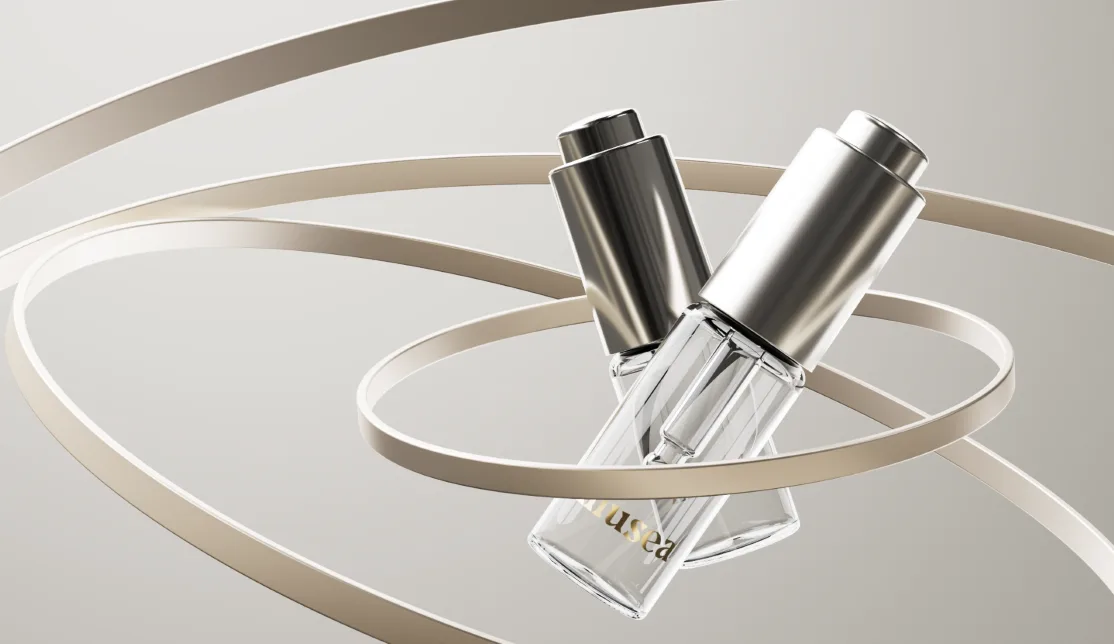
A dropper doses through three coupled variables — bulb rebound, pipette bore geometry, and tip drop behavior — and a high-viscosity formula stresses all three at once. This article walks the draw, the bore, and the breakup against the recorded dropper program data: 73 catalog…
Aug 29, 2026
/
packaging-technology
A gel in an airless bottle is hardest to dose after it has sat at rest: high thixotropy lets the formula's structure rebuild against the chamber refill, so early strokes run light until the gel is re-sheared. This article walks the refill mechanism against the…
Aug 29, 2026
/
packaging-technology
A dual-chamber pump keeps two phases apart in the reservoir only to risk blending them at the orifice, where residual product sits between strokes. The airless bottle family records 89 catalog models and the lotion pump family records 62 models; ball and gasket/seal are recorded…
Aug 29, 2026
/
packaging-technology
A swirl orifice insert spins the liquid into a hollow cone before it leaves a fine mist actuator; insert seating — press-fit depth, micro-interference, blowout survival — is project configuration, anchored by the recorded fine mist family and its test hooks.
Aug 29, 2026
/
packaging-technology
A tear-band closure makes the first open a mechanical event: bridges between skirt and band hold through capping and shipping, then shear on the first turn. Cap/closure and fragrance cap/collar are recorded components, the cap family lists 7 catalog models, and POM is a recorded…
Aug 29, 2026
/
packaging-technology
The pump catalog records 62 models across lotion and foam variants, with per-stroke output records from 0.13 ml to 4.00 ml — the recorded high-dosage record — and neck finishes spanning 18/410 to 28/410. Delivering that dose is a feeding problem: dip tube bore, ball…
Aug 29, 2026
/
packaging-technology
A swirl chamber is the atomization mechanism behind a fine spray on the actuator, fine-mist, and atomizer families — and in the catalog it is a project-level configuration, not a recorded field. This article anchors the discussion in the verified family frame — 42 actuator…
Aug 29, 2026
/
packaging-technology
A low-profile collar compresses the dropper's neck into a flatter push-button head: travel distance decides how much air the button clears, an internal diaphragm reseal keeps the barrel airtight between draws, and dose linearity asks whether every stroke lands on the same target. The record…
Aug 29, 2026
/
packaging-technology
A dual-nozzle head on an airless pump turns a divided chamber into one coordinated dose: the two orifices sit apart, the phases blend in the bulk stream, and viscosity mismatch sets how wide the window can be. The record anchors the airless family at 89…
Aug 29, 2026
/
packaging-technology
A cream pump holds its dose at two gates: the valve that opens the charge and the hinge that reseats it after every stroke — fatigue lives at the second gate. The recorded side of the conversation is compact: the lotion pump family carries 59…
Aug 29, 2026
/
packaging-technology
A fine spray that keeps flowing without a propellant gas is a chamber-dynamics problem: the plume is sustained by energy stored inside the pump mechanism rather than by a dissolved gas driving the liquid out. This article maps the recorded program data — the fine-mist…